Disclosure: The information on this site has been sourced from the internet and AI technology.
Sonnet XIII
Garcilaso de la Vega's Sonnet XIII was written during the Spanish Renaissance. In this poem Garcilaso recreates the classical mythology and metamorphoses of Apollo and Daphne to introduce the themes of Renaissance poetry: innocence, power and tragedy.
His poem caputures the classical imagery of beauty and elegance with a transformation ending in destruction and sorrow.
Garcilaso (1501-1536), a soldier, administrator and author was a mestizo of Spanish and Inca ancestry. His ability to speak Quechua and Spanish was instrumental in interpreting worldview of two traditions and two cultures.
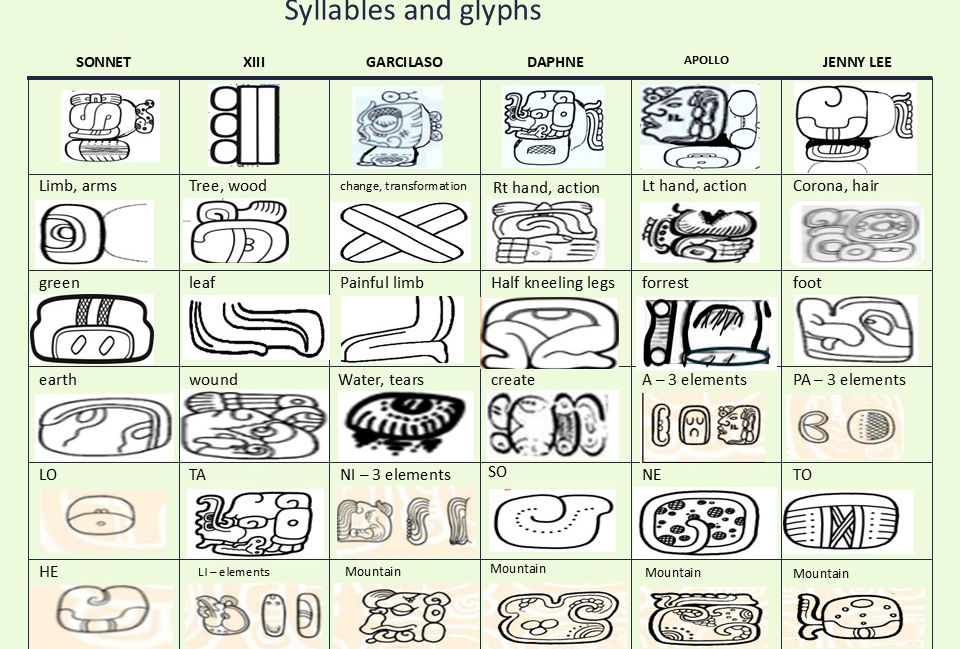
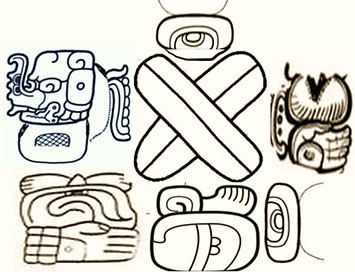
This project introduces a visual reading of Sonnet XIII through a codex, inspired by class assignments of the early cultures of the Maya and their written language. The codex translates the poem into a system of phonetic and conceptual glyphs that represent actions, emotions and transformations. The object of this project is to interpret the sonnet through the visual language of the codices. This is an elementary attempt using the codex's rules of syllables, glyphs processes represented by change and a vertical, zigzagging reading order.
1
2


3

4

5


SONNET XIII
To Daphne her arms were already growing and turning into long branches,
I saw her hair, which darkened the gold, turning into green leaves;
her tender limbs,
still throbbing, were covered with rough bark;
her soft feet sank into the earth and turned into twisted roots.
He who was the cause of such harm,
by dint of weeping, made this tree grow,
which he watered with tears.
Oh wretched state, oh cruel fate,
that by weeping for her,
the cause and reason
for which he wept should grow each day!
6
7
8
Each block correspond to the structure of the sonnet:
Block 1 - Title: Sonnet XIII Garcilaso
Block 2 - The pursuit Glyphs of movement, change, and emotional tension
Block 3 - First signs of metamorphosis, use of limbs and crown to show the beginning of change
Block 4 - Growing transformation, tree appears for the first time as an element.
Block 5 - Fixation on the earth. Earth creates the basis of the process.
Block 6 - Apollo as the agent of harm, hands (left and right) and the beginning of weeping
Block 7 - The weeping nourishes the tree, water and grow show the tension. The miserable state
(woe), the WOUND glyph dominates the final block, represents the growing pain.
Block 8 - Codices author Jennifer Lee